Panel-ready and built-in appliances, with reveals dialed to zero and panels flush to the run
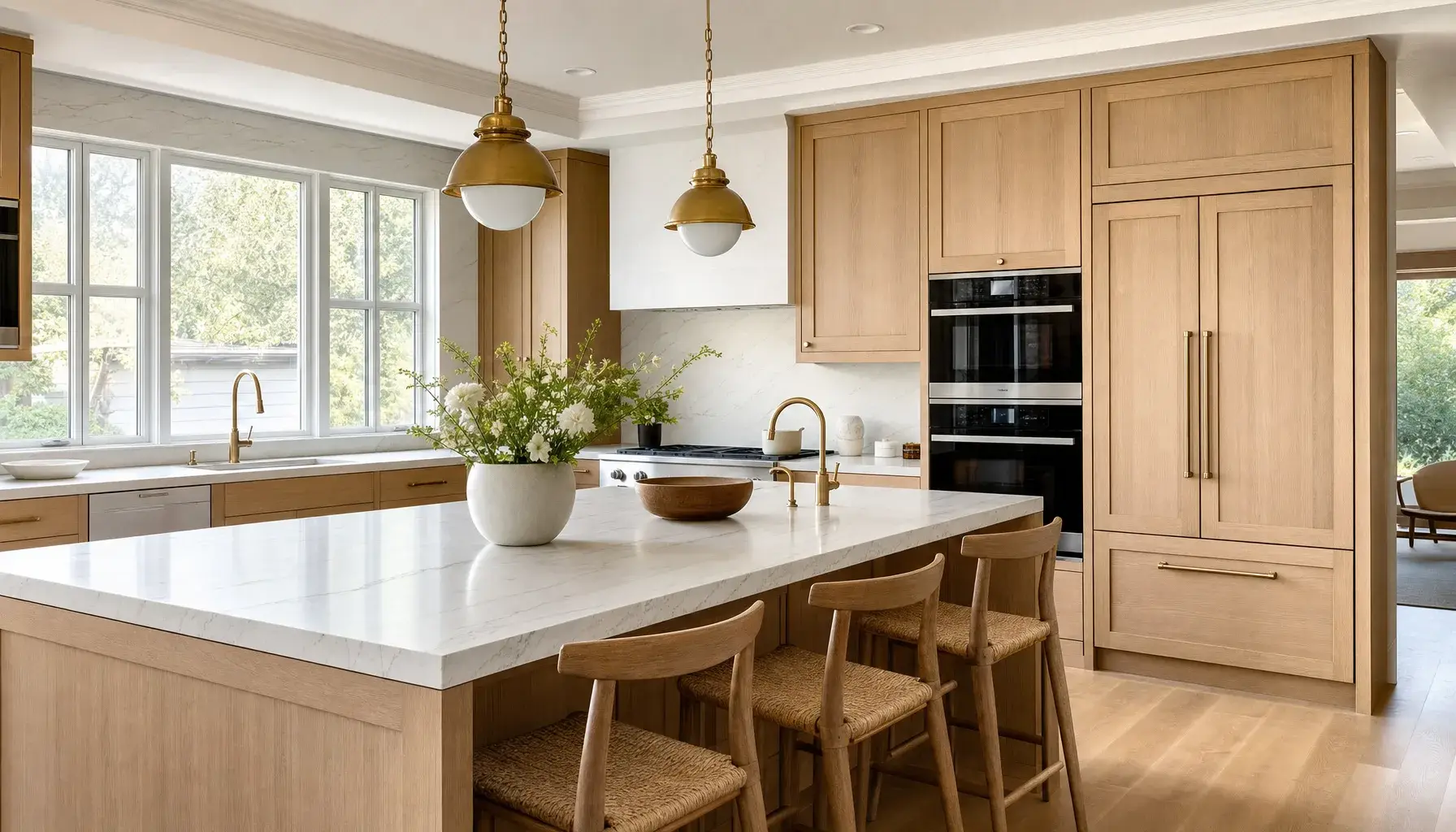
A fully integrated refrigerator column or flush dishwasher is judged by a single thing: are the reveals dead even, top to bottom and side to side? We set the appliance and tune the surrounding cabinet so the panel sits flush to the cabinetry, not proud of it.
- Reveals checked with a feeler gauge against the adjacent doors
- Hinge tension set to the actual panel weight
- Handle height and toe-kick line carried across the run
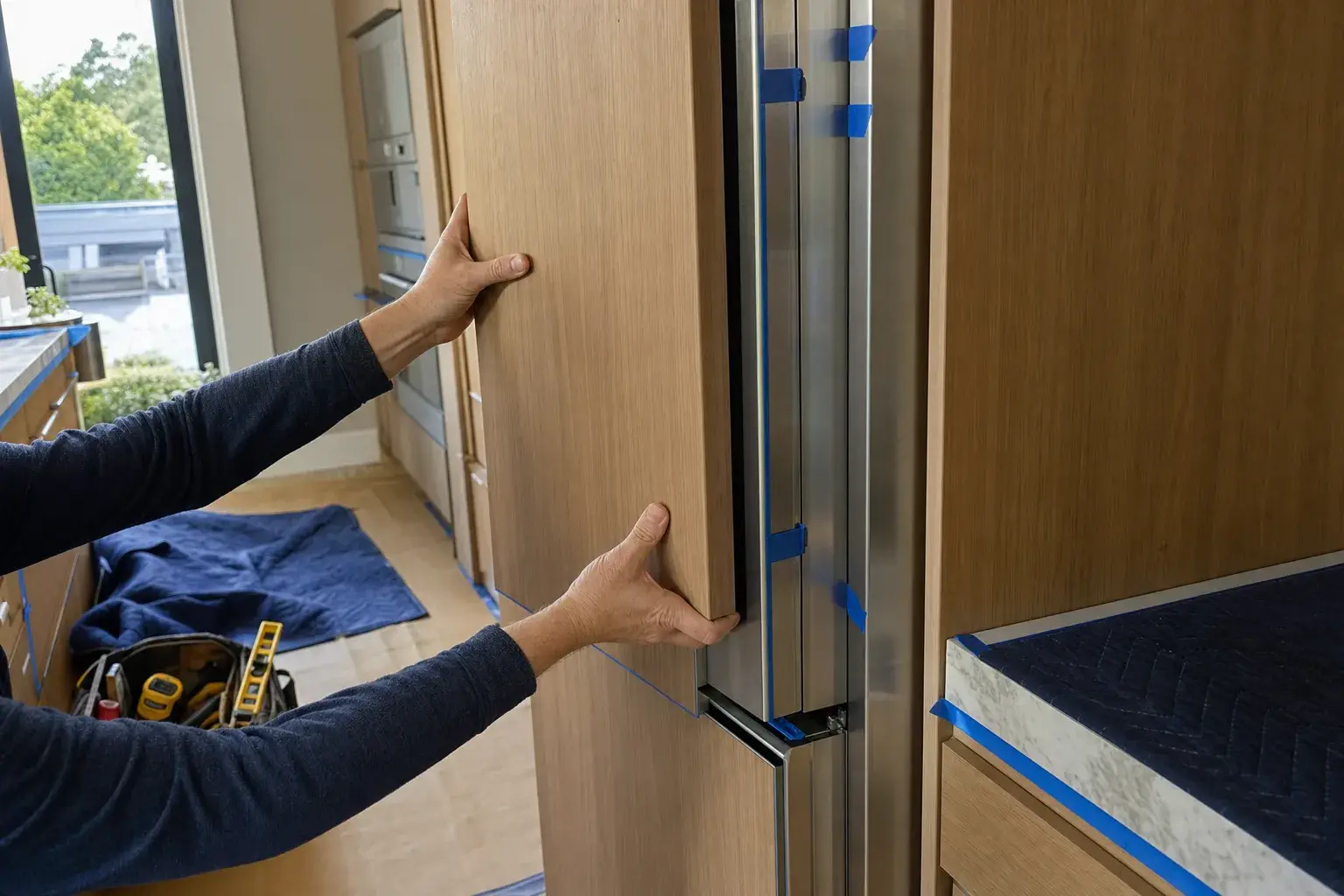
Panel-ready and fully integrated appliances are the hardest installs in the kitchen, because the appliance is only half the job. A Sub-Zero column or an integrated Miele dishwasher ships ready to wear a custom door, but hanging that door flat, level, and with a consistent reveal on every side is carpentry, not a plug-and-play swap. The unit has to be plumb in its opening, the hinges and door mechanism dialed to the panel's weight, the toe-kick and grille lined up with the run, and the reveal between the panel and the neighboring cabinet doors held to the same gap the rest of the kitchen uses. Get any of that wrong and the eye finds it immediately. Done right, the column, the dishwasher, and the cabinets all line up as one built piece.
The problems we actually solve
The reveals don't line up
A panel that's an eighth proud on one side or tilts open at the top is the first thing guests notice. We set the door so the gap around it matches the cabinet doors beside it — even, parallel, and consistent, measured with a feeler gauge against the neighbors.
The custom panel is heavy and unforgiving
Overlay panels for a refrigerator column can weigh more than the door hardware expects out of the box. We balance the hinge tension and stops to the real panel weight so it swings true and self-closes without slamming.
Handle and toe-kick lines drift out of true
When the panel handle sits a touch high or the toe-kick steps in or out from the cabinet base, the whole run looks off even if the reveal is tight. We set the handle to the run's height and projection and trim the grille and toe-kick to a continuous line.
Panel-Ready & Built-In Appliance Integration, done properly
Set & level the appliance in its opening
Refrigerator columns, integrated dishwashers, and undercounter units leveled front-to-back and side-to-side, anti-tip and securement done to spec, and the unit pulled square to the face of the cabinetry before any panel goes on.
Hang custom overlay panels & handles
We mount the cabinet shop's panel to the appliance door bracket, set it flush with the adjacent doors, and drill and fit the handle so it lands at the same height and projection as the rest of the run.
Dial in even reveals
Hinge height, depth, and tilt adjusted until the gap around the panel is uniform top, bottom, and both sides — checked against the neighboring doors with a feeler gauge so the same gauge slides in everywhere.
Align toe-kicks & grilles
The lower grille on a column and the toe-kick under an integrated dishwasher trimmed and set to a continuous line with the cabinet base, so nothing breaks the horizontal across the run.
Tune the cabinet to the unit
When the opening is a hair tight, the panel fouls a face frame, or a filler is needed to hold the reveal, we adjust the cabinet on the same visit instead of compromising the gap to make it work.
Mask, protect & hand over clean
Finished panels and surrounding cabinetry masked before work starts, fingerprints and adhesive kept off the show face, and water and power confirmed working before we clear out.
What we account for
-
Panel weight and door swing
The maximum panel weight an appliance hinge can carry is a real spec, and a thick solid-wood overlay can run close to it. The panel's weight has to be known before it's hung so the door mechanism is set correctly and doesn't sag over time.
-
Reveal width set by the cabinet, not the appliance
The gap your panel needs is dictated by the door style and reveal your cabinet maker used. We match the appliance panel to that reveal, which sometimes means a filler or a scribe rather than relying on the appliance's default clearances.
-
Utilities behind the unit
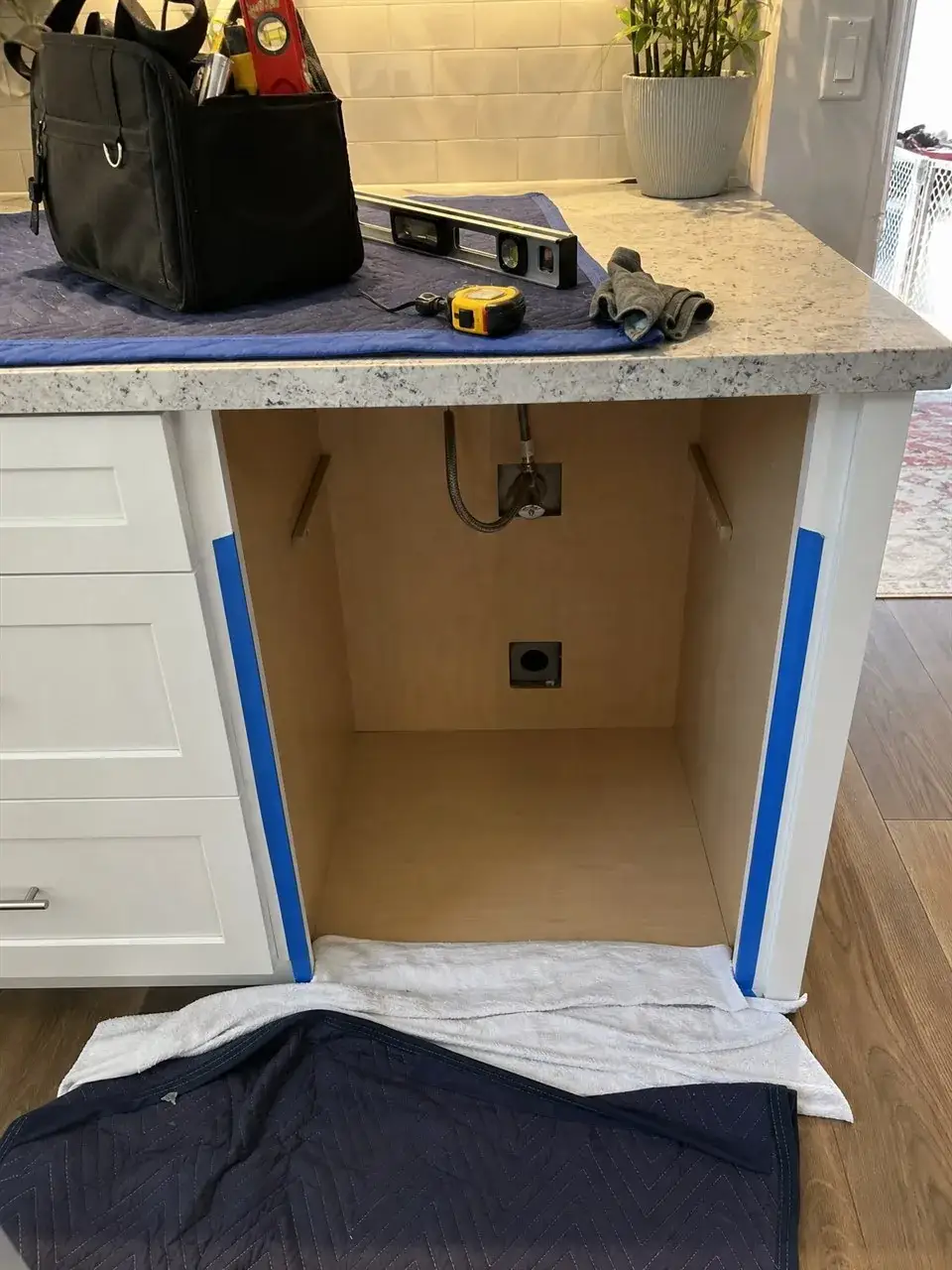
Built-in columns and integrated dishwashers want their water, drain, and power roughed into specific zones so the unit can sit fully back. If a line lands in the wrong spot, the appliance stands proud and the reveal is wrong before the panel is even on — worth checking before the cabinets close in.
The reveal is shared between the panel, the unit, and the cabinet
On an integrated install, the gap you see isn't made by the appliance alone — it's the appliance, its overlay panel, and the cabinet all landing in the same plane. When that gap runs tight on one side, the fix might be reseating the unit, re-shimming a hinge, scribing a filler, or shaving a face frame, and you usually can't tell which until you're working it. The person setting the appliance has to be able to do the carpentry right then, in the same plane, on the same visit. That's how we chase a stubborn reveal down to an even line instead of settling for close enough.
See how cabinet modification worksFrom measurement to a clean, level fit
- 01
Assess & measure
We start with the appliance spec sheet and the opening it has to live in — width, depth, height, the face frame, utilities, and the cabinet around it. Most fit problems are decided here, before a single tool comes out.
- 02
Protect the kitchen
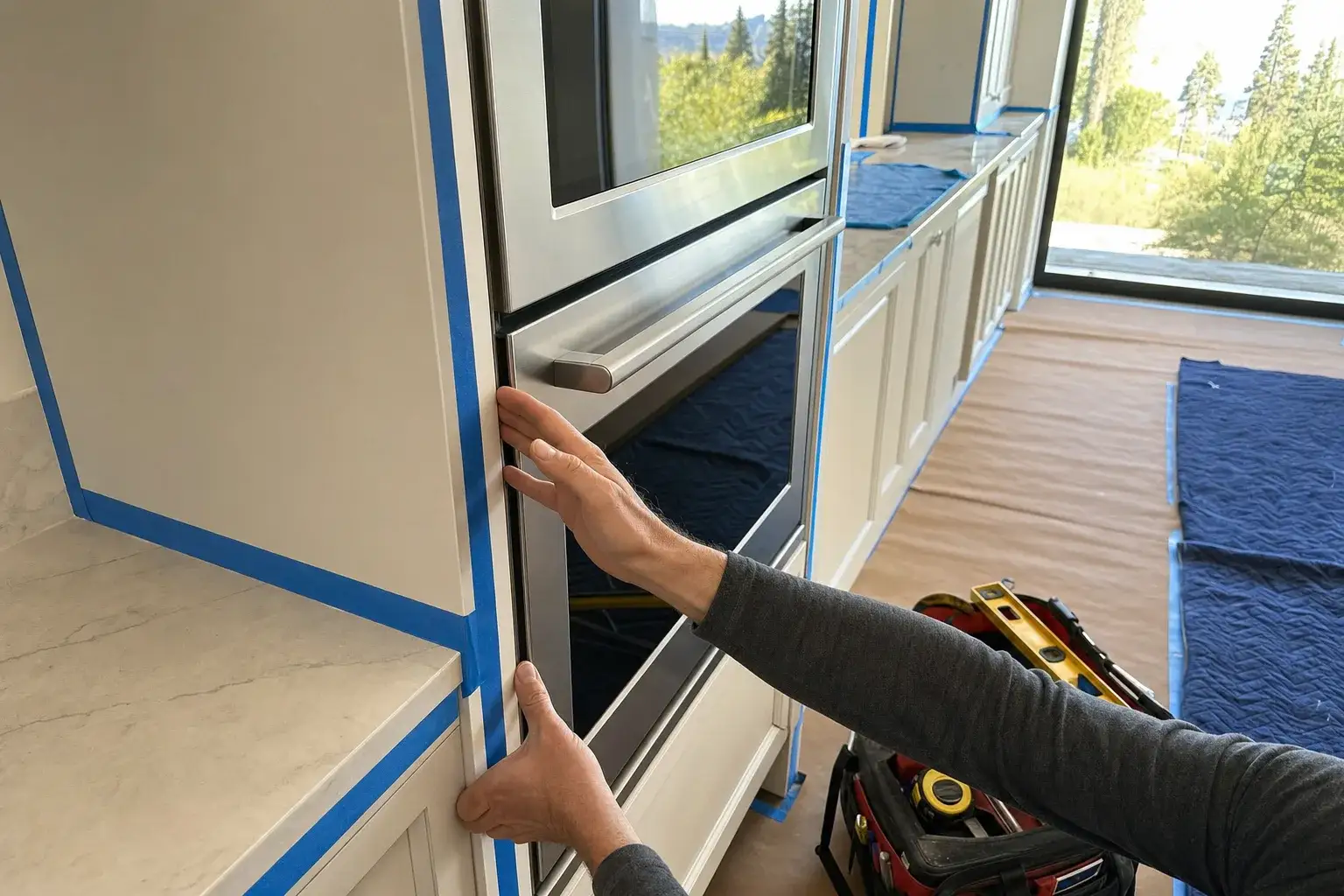
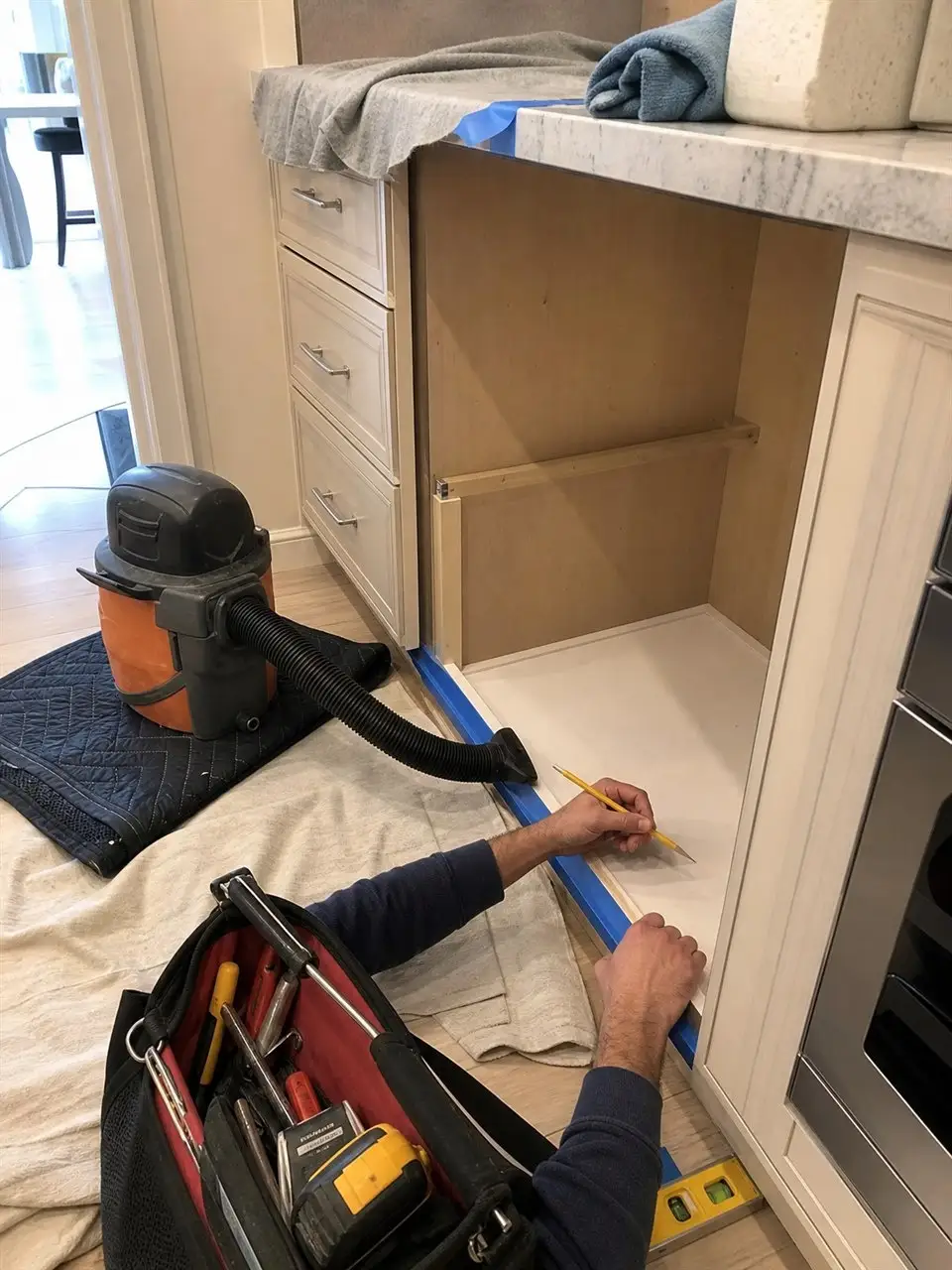
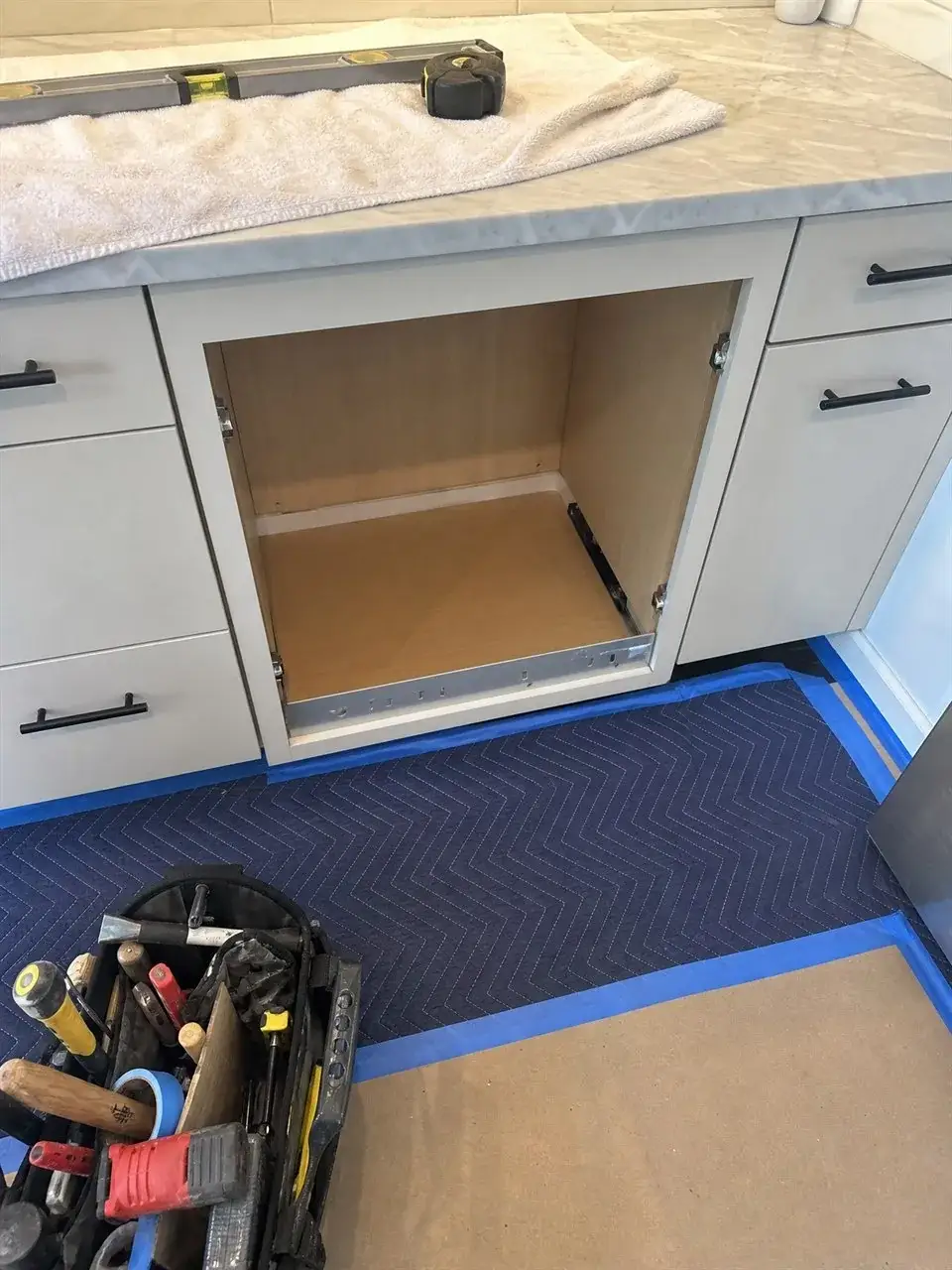
Floors, countertops, and finished cabinet faces get covered, padded, and taped off first. Blue tape on the edges, moving blankets and ram board on the floor, and a vacuum staged for dust control.
- 03
Install & fit the cabinet
We set the appliance — and when it does not drop in clean, we modify the cabinet to make it: resizing the opening, building a support platform, adding filler strips, or aligning panels and trim for an even reveal.
- 04
Level, test & clean
The appliance is leveled, secured, and anti-tip hardware set where it belongs. We test operation, check every reveal and gap, then vacuum and wipe down so the kitchen is ready to use.
What this work looks like in the field
Measuring, protection, and the cabinet detail that makes the fit clean — photographed on real jobs.
Brands we install and fit
- Sub-Zero
- Wolf
- Thermador
- Miele
- Cove
- Gaggenau
- JennAir
What panel-ready & built-in typically costs
A flat $89 service call covers coming out and assessing the job against your appliance spec. Project pricing starts from the figures shown and is confirmed on site — cabinet work has a lot of variables, so we quote it exactly once we see the space.
Panel-Ready & Built-In: common questions
What's the difference between panel-ready and fully integrated?
Panel-ready means the appliance is built to accept a custom door panel that matches your cabinets, but it still has visible edges or a vent grille. Fully integrated goes a step further and sits flush in the run with no exposed appliance face. Both need the panel hung straight and the reveal dialed in — that's the part we handle.
Do you supply the custom panels, or does my cabinet maker?
The panels come from your cabinet shop so they match your door style, finish, and reveal exactly. We coordinate the bracket locations and panel dimensions with them ahead of time, then hang and align the finished panels when we set the appliance.
My integrated fridge panel sags or the gap is uneven — can you fix it?
Usually, yes. Sag and uneven reveals almost always trace back to hinge adjustment set for the wrong panel weight or a unit that isn't sitting square in its opening. We re-level the appliance, reset the door mechanism to the real panel, and bring the reveal back to even with shims set to spec.
Can you align the toe-kick and grille with my cabinet base?
That's part of the job. The lower grille on a refrigerator column and the toe-kick under an integrated dishwasher get trimmed and set to run continuous with the cabinet base, so the horizontal line across the bottom of the run stays unbroken.
Should you see the appliance before the cabinets are finished?
It helps. Knowing the unit's opening, utility zones, and panel bracket points before the cabinetry closes in means the reveal can be planned rather than fought afterward. If you're early in a project, call us to walk the layout and panel specs with your cabinet maker, and we'll flag anything worth catching now.
Often part of the same job
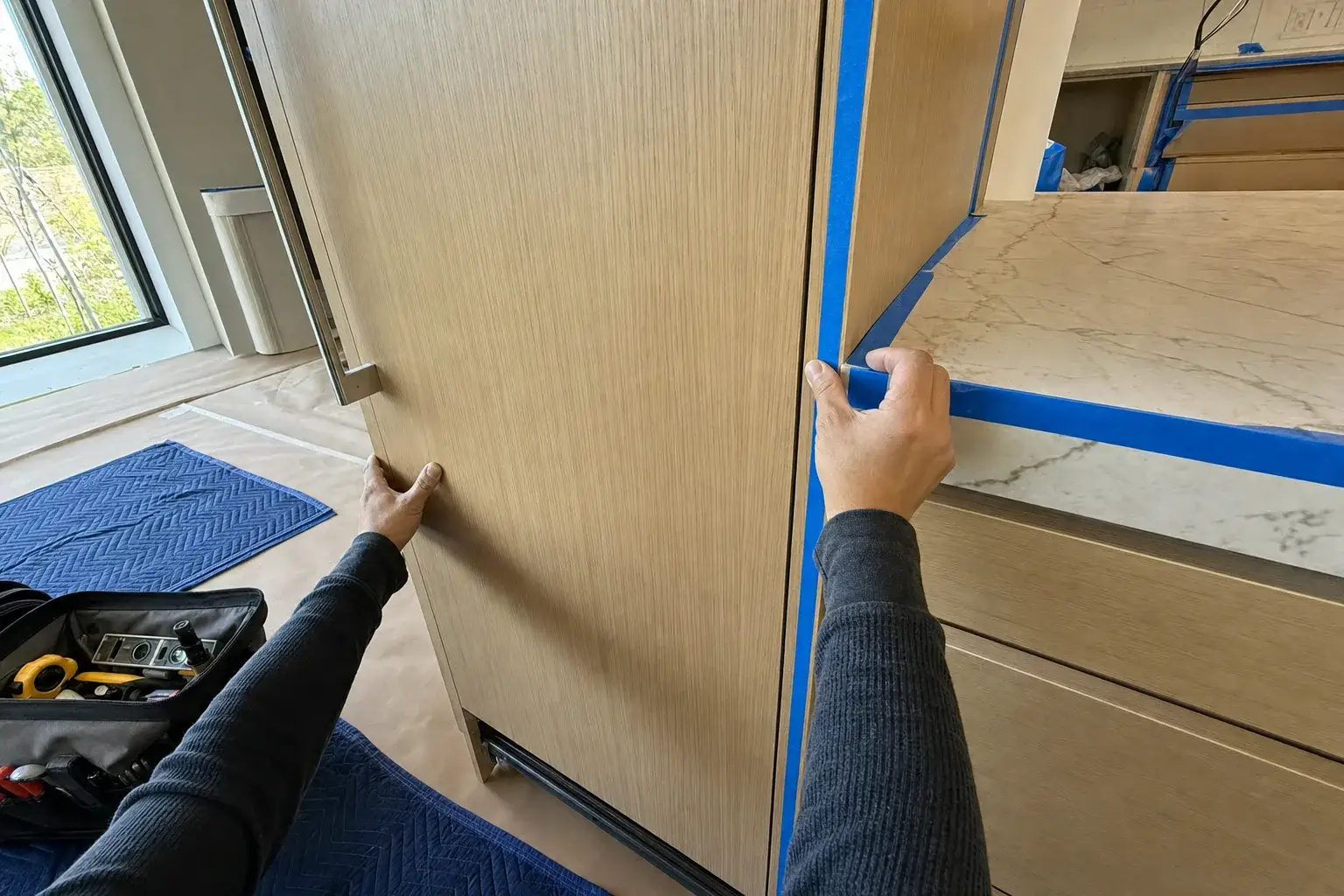
Refrigerator Installation
We install counter-depth, built-in, and panel-ready refrigerators — and when the cavity is the wrong size, we modify the surround so the unit sits flush, level, and even.
Learn more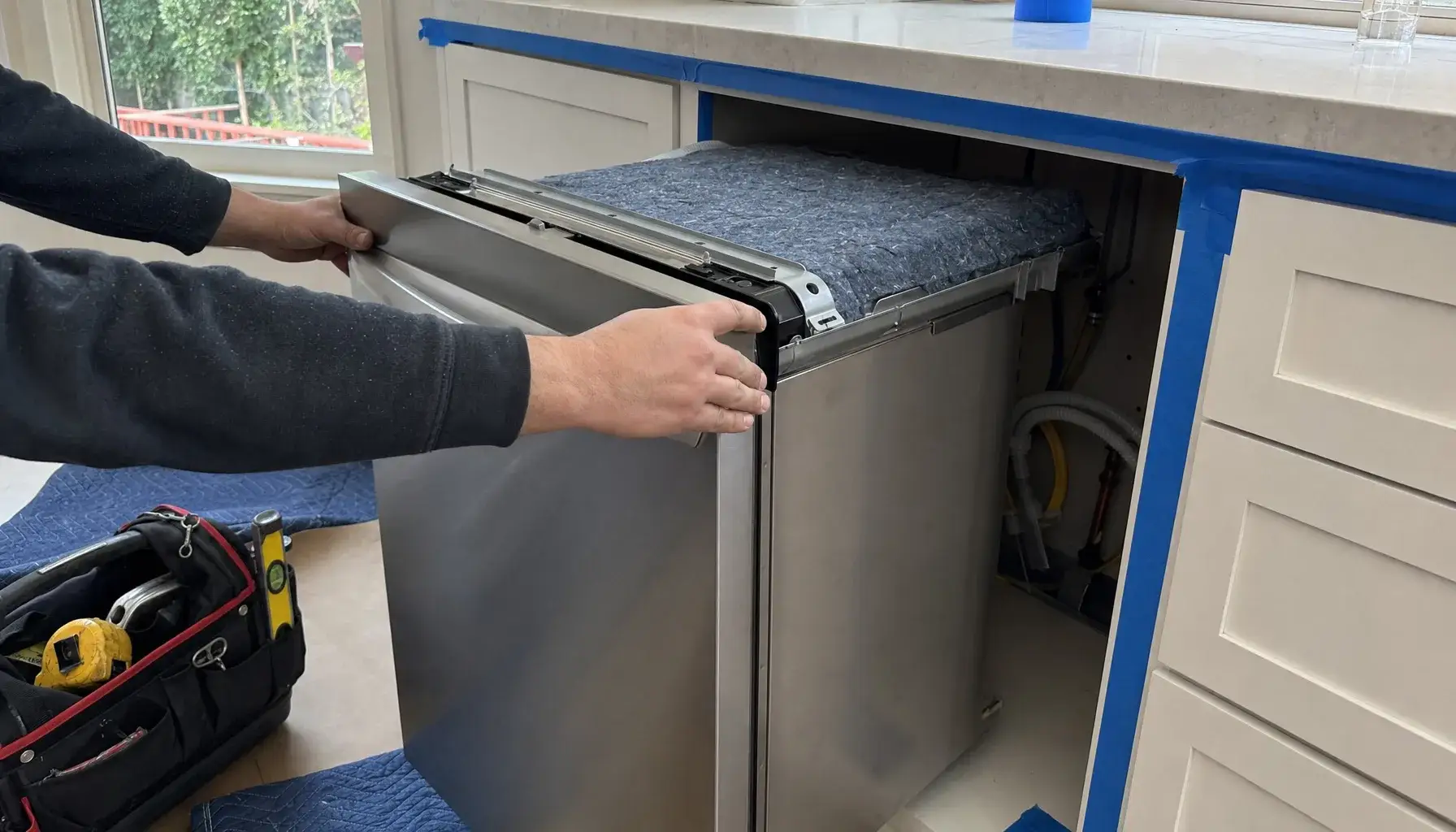
Dishwasher Installation
A dishwasher that's level, leak-checked, and secured to the counter — and if the bay is too wide or too tight, we close the gap or trim it on the same visit.
Learn more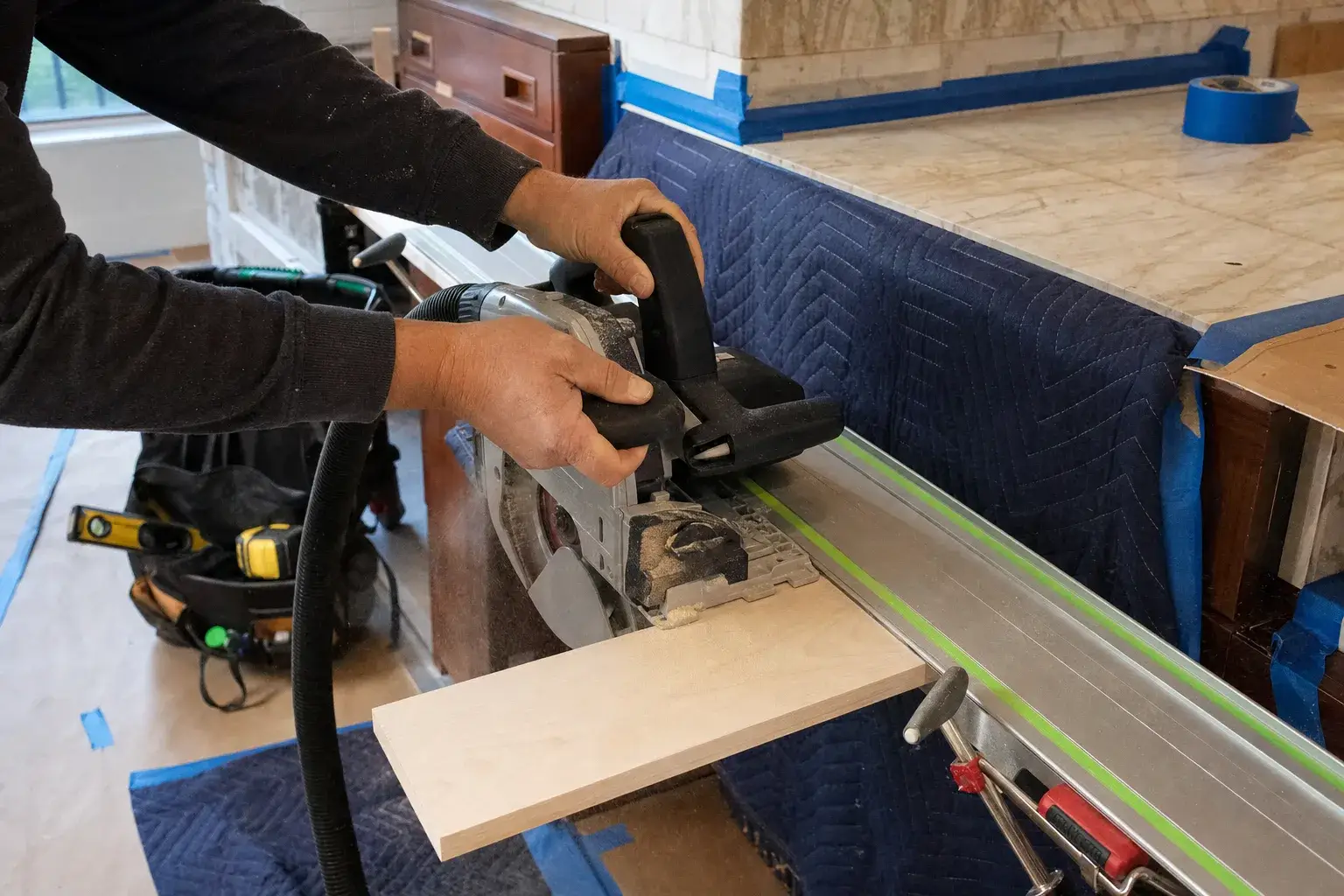
Cabinet Modification
When an opening is a half-inch too tight or a face frame is in the way, we modify the cabinet so the appliance fits — square, level, and damage-free.
Learn morePanel-Ready & Built-In — what homeowners say
Professional from start to finish. Installed a built-in microwave and wall oven. Everything was level, sealed, and tested before they left. Couldn't ask for more.
Third time using this service and they never disappoint. Most recently had a wine cooler installed under the counter. Clean, quiet, exactly where I wanted it.
Installed a new trash compactor and wine fridge the same day my contractor said it would take a week. These guys are fast without cutting corners.
Had my new Samsung washer and dryer installed same day I called. The tech showed up on time, was professional, and even leveled the machines perfectly. No leaks, no issues. Highly recommend for anyone in the South Bay.
Finally got my LG refrigerator installed after waiting on another company for 2 weeks. These guys came out the next morning. Hooked up the water line for the ice maker, cleaned up after themselves. 5 stars.
Installed my new dishwasher in under an hour. The old one had a weird fitting issue and they worked through it without charging extra. Honest and fast.
Get your appliance opening checked before delivery day
Send the appliance specs and a couple of photos of the space. We confirm the fit, flag any cabinet work, and give you a clear plan — no guesswork on install day.